




News & Blogs
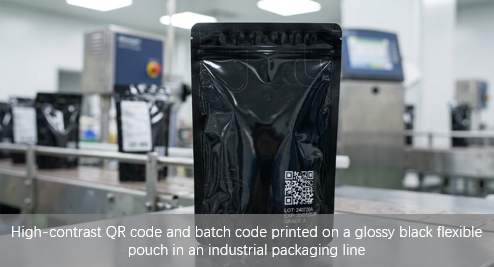
Flexible films (BOPP, PET, PE) and rigid plastics present unique hurdles for 2D barcode verification. Non-porous surfaces, low surface energy, and specular reflection frequently cause unreadable QR codes, leading to ISO/IEC 15415 rejections and line downtime. Achieving Grade A/B scannability requires optimizing substrate physics, ink chemistry, and optical geometry.
1. Managing Surface Physics & Reflectance Contrast
Optical scanners rely on symbol contrast () under 660nm LED illumination. On dark or transparent films, standard black solvent ink lacks a baseline reflection background. Utilizing an inkjet printer white ink system or high-contrast pigment establishes the required optical foundation. For glossy substrates prone to glare, adjusting pulse frequency on a uv laser marking machine creates a matte etch, suppressing specular highlights without degrading module boundaries.
2. Matching Marking Technologies to Flexible Substrates
Selecting appropriate industrial marking solutions depends on film tension, line velocity, and cure times:
Technology | Substrate Compatibility | Primary Application |
Smooth films, pouch laminates, plastic cards | High-resolution 600 DPI batch coding machine for pouch applications | |
Flexible packaging films, continuous webs | Precision ribbon-based date code printer for flow-wrappers | |
PE/PP bags, extruded pipes, plastic bottles | High-speed non-contact expiry date inkjet printer | |
Rigid plastics, PET containers, multi-layer film | Permanent direct part marking via co2 flying laser marking machine |
For offline rework or batch testing, a handheld inkjet printer or portable laser marker offers operational flexibility. However, line speed fluctuations can distort module aspect ratios. Integrating an inline inkjet printer or online laser marking machine on conveyor systems guarantees constant motion vectors and uniform grid geometry.
3. Geometric Calibration and Preventive Maintenance
Quiet Zone Margins: Maintain an unobstructed quiet zone ( or minimum module width) on flexible pouches to prevent heat-seal wrinkles from corrupting sensor framing.
Raster & DPI Alignment: Match print controller DPI directly to target cell dimensions. Unaligned scaling causes edge rounding, severely degrading modulation scores.
Optics & Nozzle Care: Clogged nozzles on an industrial inkjet date printer introduce row dropouts, while residue on a desktop fiber laser optic causes beam divergence. Regular purge schedules ensure crisp cell definitions.
Conclusion
Improving QR code scannability on plastic packaging requires balancing ink drying time, surface energy, and optical geometry. Implementing properly calibrated coding and marking machines guarantees continuous compliance and seamless supply chain traceability.
Next Step in Traceability: Printing on miniature electronic components instead? Read our specialized guide on [How to Print High-Scannability Micro QR Codes on PCB Boards].