


News & Blogs
In today's fast-paced manufacturing sectors, establishing bulletproof product traceability is critical. To meet rigorous corporate branding and regulatory tracking demands, integrating reliable industrial marking systems into production workflows is essential. However, selecting the right machinery requires a clear evaluation of cost, material compatibility, and operational environments.
As an industrial coding expert offering one-stop TTO, CIJ, TIJ, laser, and visual inspection systems, Meenjet leverages this multi-technology expertise to present a neutral, 3-step guide to help you choose the ideal laser solution.
Step 1: Evaluate Technology & Cost (Inkjet vs. Laser)
The initial phase of your selection process involves deciding whether to deploy traditional ink-based systems or invest in advanced laser hardware. While a flexible batch coder or standard ink-based units are affordable upfront, ongoing expenses accumulate quickly. Meenjet evaluates both tracks to help you balance your budget:
Selection Factors | Inkjet Systems (TIJ / CIJ) | Laser Marking Machine |
Consumables Cost | Continuous expenditure on ink, fluids, and solvents | Zero consumable costs |
Downtime Risk | CIJ requires periodic nozzle cleaning; TIJ is maintenance-free | Virtually zero maintenance downtime |
Mark Performance | May scratch, fade, or dissolve over time | 100% permanent and indestructible |
TCO (Long Term) | High long-term operational expenses (OPEX) | Low long-term OPEX; higher initial capital |
Step 2: Match the Laser Source to Your Material
Different factory substrates absorb light wavelengths uniquely. To optimize contrast and maintain material integrity, Meenjet categorizes industrial laser configurations into three distinct options:
Fiber Laser: The definitive metal marking machine. Utilizing a fiber laser marking machine or a space-saving desktop fiber laser workstation is best for high-contrast etching on robust metals, carbon steel, and dense materials.
CO2 Laser: Ideal for organic non-metallic substrates. A specialized co2 laser marking machine delivers excellent, high-speed laser coding on wood, acrylics, leather, fabrics, and cardboard shipping boxes.
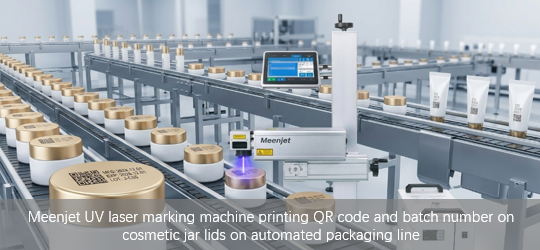
UV Laser: Perfect for damage-prone materials and ultra-precise etching. A premium uv laser marking machine uses a high-precision, low-heat wavelength to safely mark glass, ceramics, medical instruments, and delicate microelectronics without micro-cracking sensitive surfaces.
Step 3: Define Production Speed and Form Factor
The final choice depends on how the machinery fits your physical factory floor. For mobile, off-line, or manual tasks, a mobile portable laser marker or a flexible handheld laser marking gun offers ultimate on-the-spot tracking agility.
Alternatively, if you manage high-volume assembly operations, a fast flying laser marking machine is required. Partnering with an all-around hardware provider like Meenjet ensures you deploy an optimized online flying fiber laser marking machine that integrates seamlessly into automated production environments. This synchronization eliminates code distortion or overlapping tags, hitting strict tracking compliance rules without sacrificing throughput.
Expert Integration Tip: Choosing permanent, laser-etched product marking solutions over a basic expiration date stamper removes the threat of unreadable Data Matrix codes. By integrating these with Meenjet’s visual inspection systems, manufacturers achieve flawless, automated verification for their global supply chains.