



News & Blogs
Quick Summary: Selecting a TIJ Ink Cartridge
Substrate Material: Match porous surfaces (paper, cartons) with water-based fluids and non-porous surfaces (plastics, metals) with fast-drying solvent inks.
Decap Time & Performance: Balance line speed against decap time (nozzle open time) to prevent clogging during coding pauses.
Specialty Applications: Deploy high-opacity inkjet printer white ink for reliable contrast and strong scratch resistance on dark, smooth tracking surfaces.
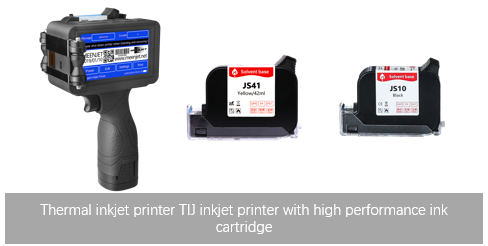
Thermal inkjet technology has transformed modern production lines. A thermal inkjet printer (TIJ printer) offers an agile, high-resolution, and maintenance-free alternative to traditional continuous inkjet printers or mechanical ribbon printer options. However, maximizing the efficiency of your TIJ inkjet printer depends entirely on one crucial component: selecting the right ink cartridge.
Whether you operate a fixed desktop inkjet printer or deploy a highly agile handheld inkjet printer, matching the ink chemistry to your specific substrate is vital for ensuring crisp, durable, and compliant mark-offs. This guide outlines how to choose the ideal cartridge for your industrial coding needs.
1. Identify the Substrate Material & Base Chemistry
The surface material dictates your ink chemistry. Using the wrong formulation causes smudging, poor adhesion, or complete legibility failure.
Porous Substrates (Paper, Cardboard, Cartons)
For standard packaging, water-based inks are ideal. They penetrate fibers deeply, offering excellent drying times and crisp dark prints. If you run a high-volume warehouse using an inline inkjet printer or an inkjet carton printer, water-based formulations deliver highly reliable results at a lower cost per print.
Non-Porous Substrates (Plastics, Metals, Glass)
Non-porous materials do not absorb liquids. You must utilize specialized solvent-based cartridges (typically Ethanol or Acetone base) to guarantee maximum scratch resistance. If your application involves a printing machine on plastic bag substrates or a dedicated inkjet printer for bottles, these fast-drying solvent inks adhere tightly to the smooth outer layer through rapid chemical evaporation, preventing smudging under high production speeds.
2. Background Color and High-Contrast Scratch Resistance
High readability is essential for logistics tracking and regulatory compliance. Dark surfaces present distinct visibility challenges.
Standard black inks perform poorly on dark amber glass, black plastics, or heavy cables. For these materials, utilizing pigmented inks—specifically high-opacity inkjet printer white ink—is highly recommended. When paired with a reliable handheld date code printer or a stationary cable marking machine, these advanced pigmented cartridges provide a bright, high-contrast mark that ensures clear barcode tracking and error-free optical scanning without scratching off during post-print handling.
3. Form Factor: Decap Time vs. Production Line Velocity
The physical structure of your printing hardware directly influences cartridge performance and ink stability requirements:
Stationary & Inline Integration: Fixed systems, such as an automatic batch coding machine or high-capacity industrial inkjet printing machine systems, operate continuously. These setups utilize specialized high-speed solvent inks optimized for ultra-fast dry times to match high line velocity.
On-the-Go Mobility (Decap Time Priority): For offline, decentralized item tracking, a portable handheld inkjet printer gun or portable handheld inkjet printer is heavily utilized. Because portable handheld printer devices experience intermittent duty cycles (coding, pausing, moving), their cartridges must feature an extended decap time. This specialized formulation prevents ink from drying or crusting inside the nozzles while sitting idle between manual prints, eliminating frequent manual wiping.
4. Application Matrix for TIJ Cartridges
To help streamline your procurement strategy, use the reference matrix below to pair your specific industrial marking solutions with the appropriate ink and equipment types:
Target Application | Material Type | Recommended Ink Type | Typical Equipment Used |
Cardboard Shipping Boxes | Porous Corrugated | Water-Based Black / Blue | Inline Inkjet Batch Coder |
PET Bottles & Cans | Non-Porous Plastic / Metal | Fast-Dry Solvent (Ethanol/Acetone base) | Inkjet Bottle Printer |
Dark Wire & Cable Insulation | Non-Porous PVC / PE | Inkjet printer white ink (High Contrast) | Wire Marking Machine |
Flexible Pouches & Food Bags | Non-Porous Film | Solvent-Based / Food Grade | Batch Coding Machine for Pouch |
Conclusion
Selecting the correct ink cartridge for your TIJ system is a balance between understanding your substrate, maintaining high-contrast readability, and aligning with your hardware setup. By choosing the correct water or solvent-based ink while factoring in necessary decap times, your enterprise will achieve durable, compliant codes, minimize down-time, and unlock the full potential of your industrial marking infrastructure.