




News & Blogs
In the era of smart manufacturing, the reliability of a barcode is as critical as the product's physical specifications. For manufacturers, the challenge lies in ensuring that a batch coder produces a mark that remains scannable throughout the entire product lifecycle, from the factory floor to the end consumer.
1. The Physics of Traceability: Substrate and Adhesion
The primary technical hurdle in marking coding is the surface tension of the material.
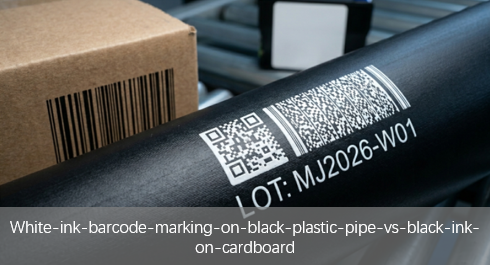
High-Surface Energy Materials: Cardboard and porous packaging are ideal for thermal inkjet printer (TIJ) applications. The ink penetrates the fibers, creating a permanent, high-resolution 2D code.
Low-Surface Energy Materials: For plastics (PE/PP) or polished metals, adhesion becomes complex. An industrial continuous inkjet printer or a fiber laser marking machine is often required to ensure the code does not rub off during transit. In high-contrast requirements, such as marking on black cable insulation, utilizing inkjet printer white ink is a standard industry practice to ensure scan rates exceed 99%.
2. Mobility vs. Throughput: Integrating the Right Coder
Selecting between a portable inkjet printer and an inline inkjet printer is a matter of production volume and geometry:
Manual Application: For oversized components or low-volume runs, a handheld coding machine provides the necessary maneuverability. Technical benchmarks, such as those found in Meenjet’s handheld series, now allow for variable data synchronization, enabling unique QR code generation for each unit.
High-Speed Integration: On automated lines, a flying laser marking machine or an automatic batch coding machine must be synchronized with conveyor speeds. The focus here shifts to "throw distance" and the frequency of the laser coding pulse to prevent distortion of the barcode modules.
3. Data Integrity and Global Compliance
As traceability standards like GS1 become mandatory, a date coder must evolve into a data management tool. Modern product marking solutions now integrate with ERP systems to prevent duplicate serial numbers. Whether utilizing a desktop fiber laser for metal parts or an expiry date inkjet printer for flexible film, the software backend must support variable data printing to meet international compliance.
4. Total Cost of Ownership (TCO) Analysis
A common oversight in selecting marking solutions is focusing solely on the inkjet coding machine price. A comprehensive TCO analysis should include:
Consumables: The cost-per-print of a TIJ inkjet printer vs. the makeup fluid requirements of a CIJ system.
Maintenance: The "zero-maintenance" advantage of a UV laser marking machine compared to the scheduled cleaning of an inkjet marking machine.
Conclusion: Engineering for Scannability
The goal of any industrial marking systems setup is to minimize "No-Read" errors in the supply chain. By aligning the marking technology—be it a portable laser marker or a high-speed inkjet coder machine—with the material properties and data requirements, manufacturers can secure their digital traceability.
Technical data and integration support for these applications can be found in the Meenjet industrial documentation, focusing on optimizing marking outcomes for diverse manufacturing environments.